How Yayoi-Era History Echoes Through Pop Culture
Most people don’t think about ancient agriculture when they look at modern art or design—but traces of those early systems are still there. Long before contemporary galleries, fashion collaborations, or digital aesthetics, early Japanese societies were already shaping ways of seeing and organizing the world. Those foundations didn’t disappear. They evolved.
The Yayoi Era, spanning roughly 300 BC to 300 AD, introduced not just new tools and farming systems, but a quieter visual logic that still surfaces today. From minimal compositions to repetitive patterns and natural symbolism, its influence can be felt across centuries of Japanese art—and even in global pop culture.
What the Yayoi Era Actually Was
The Yayoi Era marked a major turning point in early Japanese history. It followed the Jōmon period and introduced a shift toward agriculture, particularly wet-rice cultivation. This change brought more stable settlements, population growth, and new forms of social organization that shaped the direction of early Japanese society.
Technological advances also played a role. Communities adopted bronze and iron tools, improving farming efficiency and expanding craft production. These developments didn’t just affect daily life—they helped establish systems of coordination and hierarchy that would continue influencing later cultural and political structures.
Over time, these changes created a more structured society. Villages became more permanent, relationships more organized, and production more consistent. While the era is often studied for its historical importance, it also quietly introduced patterns of thinking that would later appear in art, design, and visual culture.
How Rice Farming and Bronze Casting Made Japan, Japan
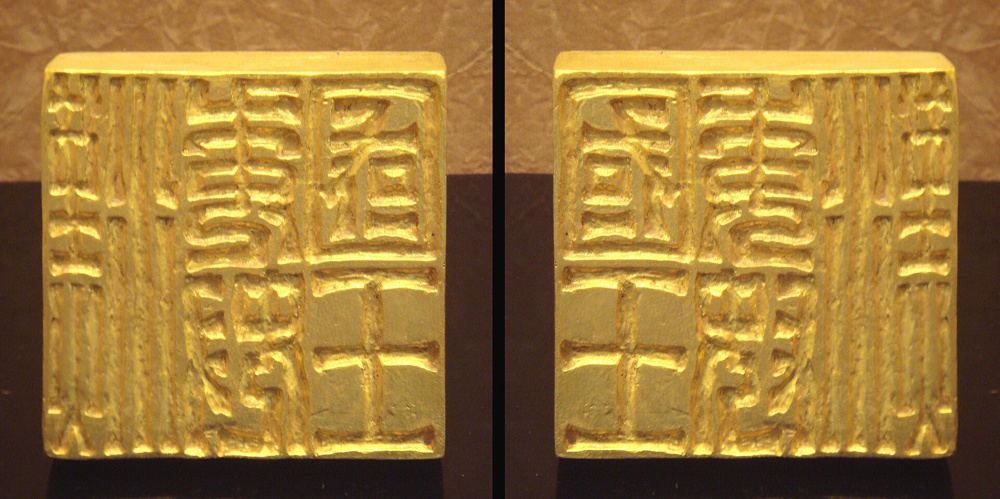
Planting rice didn't just feed Japan — it built it. When immigrants arrived in northern Kyushu with wet-rice knowledge from China's Yangtze River delta, they brought a fully developed system: canals, dams, paddy walls, and water intakes. You can see how rice demanded agricultural governance immediately — coordinating communities to manage shared waterways wasn't optional, it was survival.
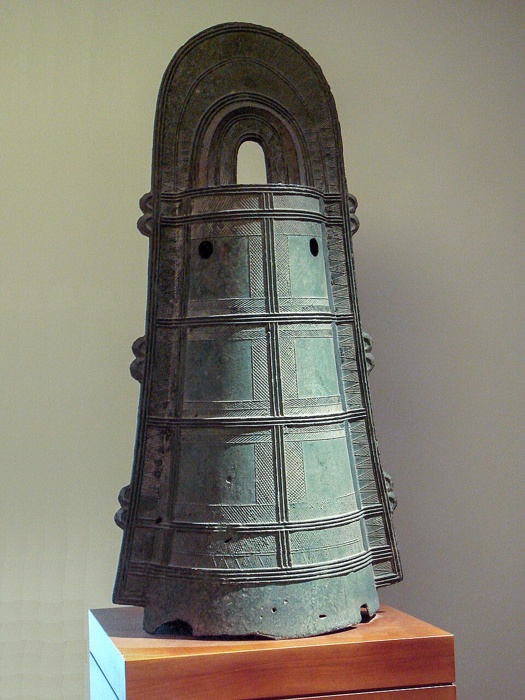
That cooperation scaled settlements, consolidated chiefdoms, and pushed civilization eastward across Honshu. Meanwhile, bronze and iron entered the picture through metallurgical trade, sharpening tools, improving harvests, and arming rivalries over fertile paddies.
Together, rice and metal didn't simply sustain the Yayoi people — they structured Japanese society from the ground up. Beyond rice, farmers cultivated at least 37 plants, including foxtail millet and adzuki beans, weaving a broader agricultural web that supported increasingly complex communities. The drive to document and preserve these cultural and agricultural foundations mirrors efforts seen in institutions like the Afghan Academy of Sciences.
The Yayoi Roots Behind Japan's Aesthetic Traditions
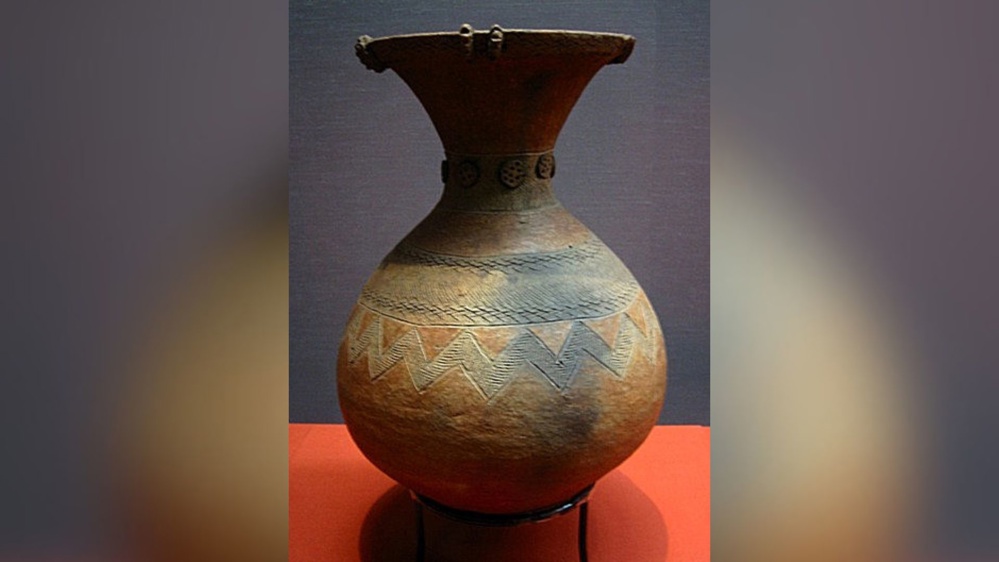
When Yayoi potters abandoned Jōmon's ornate rope patterns for clean, smooth-walled ceramics with stable bases, they weren't just making better pots — they were establishing a visual philosophy that would shape Japanese aesthetics for millennia. That rural minimalism carried directly into Yamato-e painting, where cherry blossoms, autumn grasses, and rice cultivation cycles became recurring seasonal motifs.
You can trace this lineage further through wabi-sabi's embrace of imperfection, mono no aware's bittersweet response to fleeting beauty, and ma's deliberate use of negative space. These weren't abstract philosophical inventions — they grew from agricultural communities that understood transience intimately. Today, you'll recognize those same principles in Nihonga painting, contemporary ceramics, and even manga's economy of line and composition.
Just as anthropologists have long emphasized documenting ethnic traditions through field research and oral histories. This is to preserve cultural knowledge, scholars of Japanese visual culture increasingly turn to material evidence and community practices to understand how these aesthetic values were transmitted across generations.
Where Yayoi Echoes Show Up in Modern Japanese Art
Modern Japanese art often reflects older visual instincts, even when the connection isn’t immediately obvious. Artists working with natural materials, repetitive forms, or restrained compositions are building on ideas that have existed for centuries. These choices aren’t always deliberate references, but they echo a long-standing preference for balance, simplicity, and material awareness.
Movements like Mono-ha make this connection especially clear. By focusing on raw materials—stone, metal, wood—and how they interact with space, these artists shift attention away from decoration and toward experience. The relationship between object and environment becomes the artwork itself, reflecting earlier ideas about harmony and coexistence rather than dominance or excess.
Contemporary artists continue to adapt these principles in new ways. Installations, ceramics, and mixed-media works often carry the same underlying logic, even when presented in modern contexts. This continuity allows Japanese art to evolve without losing its foundation, creating work that feels current while still grounded in historical sensibilities.
Check out MrPopCulture.com and learn more about pop culture trends in Japan’s history.
How Kusama and Murakami Translate Ancient Yayoi Instincts Into Modern Art
Both Kusama and Murakami tap into something ancient—repetitive patterns, boundless interconnection, collective ego dissolution—and repackage these instincts into globally recognized modern art. Their obsessive motifs mirror Yayoi-era communal dissolution, where individual identity merged into shared cosmic rhythms. Here's what their work translates for you:
- Kusama's polka dots symbolize life's building blocks, echoing primal energy systems ancient communities recognized in nature.
- Infinity Mirror Rooms transform hallucinatory boundlessness into immersive experiences, recreating prehistoric feelings of interconnected cosmos.
- Murakami's vibrant pop aesthetics blend manga, anime, and tradition, channeling timeless collective instincts into contemporary visual language.
When you engage with either artist, you're not just viewing modern art—you're feeling instincts humans have carried for thousands of years. Their reach extends far beyond gallery walls, as luxury brand collaborations with houses like Louis Vuitton demonstrate how these ancient visual instincts translate seamlessly into global commercial and cultural identity.
Why Anime and Manga Reflect Layered Visual Traditions
Anime and manga are often seen as distinctly modern, but their visual language reflects a long history of artistic development. While they don’t directly trace back to the Yayoi Era, they carry forward broader principles that evolved through multiple periods of Japanese art. These include simplified forms, controlled composition, and an emphasis on visual rhythm.
You can see these influences in how scenes are framed and how characters are designed. Clean lines, expressive gestures, and intentional spacing all contribute to a style that prioritizes clarity and emotional impact. These techniques didn’t appear suddenly—they developed gradually through earlier art forms like scroll paintings and woodblock prints.
This layered evolution shows how cultural influence builds over time. Anime and manga combine historical aesthetics with modern storytelling and technology, creating something that feels new while still rooted in older traditions. The result is a visual language that continues to grow without losing its connection to the past.
Why Global Pop Culture Keeps Borrowing From Japan's Ancient Past
When global pop culture reaches for ancient Japan, it rarely reaches for the Yayoi Era specifically—and that honesty matters. Most borrowed ancient motifs and ritual symbolism come filtered through later periods—feudal, Edo, or Heian—not Yayoi's 300 BCE–300 CE window.
You're consuming ancient influence through layers of historical distance. Recognizing that gap sharpens your understanding of what's authentic versus romanticized. Here's what the borrowing actually reflects:
- Selective nostalgia — creators choose visually accessible eras over archaeologically complex ones
- Misattributed ancient motifs — symbols labeled "ancient Japanese" often originate centuries after the Yayoi period
- Ritual symbolism stripped of context — spiritual aesthetics get absorbed into entertainment without historical grounding
Knowing this doesn't diminish pop culture—it makes you a more critically informed audience. This same pattern of creative borrowing and reinterpretation mirrors how Japanese innovations like the Walkman and karaoke evolved from foreign influences before reshaping global culture in return.
How Minimalism Became a Global Design Language
Minimalism is one of the clearest examples of how early aesthetic ideas expanded into global influence. Rooted in simplicity and restraint, it focuses on reducing elements to their essentials while maintaining balance and clarity. This approach aligns with long-standing Japanese design principles that prioritize space and proportion.
Over time, minimalism moved beyond art into architecture, product design, and branding. Clean layouts, neutral color palettes, and intentional spacing became widely adopted because they create a sense of order and calm. These qualities make minimalism adaptable across different contexts and industries.
Today, minimalism is everywhere—from smartphone interfaces to interior design. Its global presence shows how foundational ideas can evolve and spread far beyond their origins. What began as a subtle design philosophy has become a dominant visual language.
Why Repetition Became a Core Visual Strategy
Repetition plays a central role in both traditional and modern design. Repeating patterns, shapes, or colors creates rhythm, making visuals easier to follow and remember. This approach reflects natural cycles—seasonal changes, growth patterns, and daily routines—that early societies observed closely.
In art, repetition provides structure. It allows creators to build complexity from simple elements, creating cohesive compositions without relying on excess detail. This balance between simplicity and pattern is a recurring feature in Japanese aesthetics.
Modern creators continue using repetition across various fields. From fashion prints to digital graphics and immersive installations, repeated elements create unity and impact. This strategy connects contemporary design back to older ways of organizing visual information.
How Ancient Systems Influence Modern Creative Thinking
Beyond visual style, early systems like those from the Yayoi Era influence how creativity is approached. The emphasis on cycles, coordination, and balance can still be seen in modern design processes. Projects often develop through repetition, refinement, and gradual improvement rather than sudden breakthroughs.
This structured approach mirrors earlier systems where organization was essential. Managing resources, coordinating communities, and maintaining consistency required careful planning. These habits of thinking carried forward into creative practices over time.
Today, many creators rely on similar methods. Iteration, testing, and refinement are central to design, art, and innovation. This connection shows that influence isn’t limited to aesthetics—it also shapes how ideas are developed and executed.
Conclusion
The Yayoi Era may seem distant, but its influence hasn’t disappeared. Through shifts in agriculture, technology, and design, it introduced patterns that continued evolving across centuries of Japanese culture. Those patterns eventually found their way into modern art, design, and global pop culture.
What makes this connection compelling is its continuity. Instead of fading, these ideas adapted to new contexts and technologies. As culture continues to evolve, those early foundations remain part of the process—quietly shaping how we see, create, and interpret the world today.